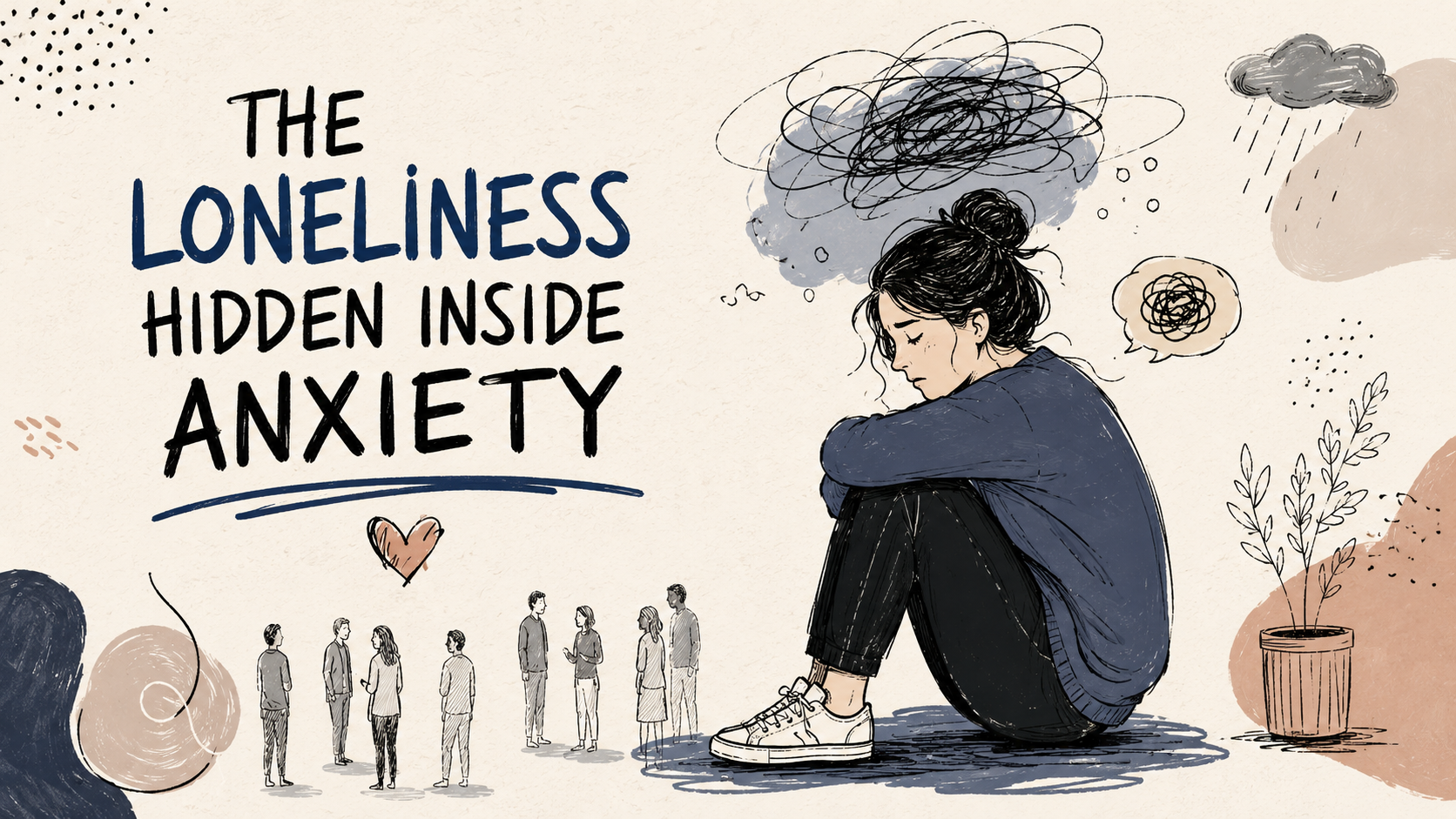

Some forms of loneliness are visible.
An empty room. A missed call. A weekend with no plans.
But anxiety creates a different kind of loneliness—one that can exist even when people are around you.
It is possible to sit in a crowded room and still feel emotionally disconnected. To laugh during conversations while your mind quietly races somewhere else.
To reply “I’m fine” because explaining what is happening inside feels too exhausting.
That is the loneliness anxiety rarely talks about.
Not isolation from people, but isolation within yourself..
Anxiety Makes You Feel Misunderstood

One of the hardest parts of anxiety is how invisible it can be.
From the outside, someone may look completely functional. They go to work, reply to messages, show up socially, and continue daily routines.
But internally, they may be carrying constant tension.
Overthinking every interaction. Replaying conversations. Worrying about things nobody else notices.
This creates emotional distance.
Not because they do not want connection, but because anxiety often makes people feel difficult to understand.
There is a silent fear that if they explain what is happening in their mind, others may minimize it, dismiss it, or simply not relate.
So they keep it inside.
And over time, that silence becomes loneliness.
The Exhaustion of Pretending You’re Okay

Many anxious people become experts at appearing calm.
They smile while panicking internally. They continue conversations while mentally spiraling. They say yes to plans even when emotionally exhausted.
This performance can become automatic.
After a while, people stop asking if you are okay because you have become so skilled at convincing everyone that you are.
But carrying invisible anxiety is tiring.
"The body stays tense. The mind stays alert. Even moments meant for rest feel mentally noisy."
Eventually, loneliness grows not only from being alone—but from feeling unseen.
Anxiety Creates Distance in Relationships

Anxiety can quietly affect relationships in ways people do not always recognize.
- Sometimes it causes withdrawal.
- Sometimes reassurance-seeking.
- Sometimes emotional avoidance.
An anxious mind often overanalyzes tone, pauses, facial expressions, or delayed replies.
Small moments begin to feel loaded with meaning.
A simple “okay” text can suddenly sound cold. A delayed response can feel personal. Silence becomes interpretation.
This mental hyperawareness creates emotional fatigue.
And because anxious people often fear becoming “too much,” they may stop expressing what they need altogether.
Social Media Can Intensify the Feeling

"Modern loneliness is not always physical, it is digital too."
Social media creates the illusion that everyone else is emotionally connected, socially fulfilled, and mentally stable.
Meanwhile, anxious people are often fighting invisible battles behind the screen.
Scrolling while emotionally vulnerable can intensify feelings of exclusion and inadequacy.
Everyone else appears to belong somewhere.
Everyone else seems lighter.
Even though those images rarely show reality, anxiety compares anyway.
And comparison deepens isolation.
Why Anxiety Makes People Pull Away

Sometimes anxious people disappear emotionally before they disappear physically.
They reply less. Avoid plans. Stay quiet in conversations.
Not because they do not care—but because anxiety can make interaction feel overwhelming.
The nervous system becomes overstimulated easily.
Even simple communication starts to feel draining when the mind is already carrying too much internal noise.
What others may interpret as distance is often exhaustion.
Anxiety rarely stays emotional—it often becomes physical too. Chest tightness, exhaustion, restlessness, and brain fog are all ways the body carries emotional stress.
Healing Often Begins with Feeling Safe Enough to Be Honest

One of the most powerful things anxiety takes away is emotional openness.
Healing often begins when someone feels safe enough to stop pretending.
Not every thought needs to be hidden. Not every struggle has to be carried privately.
Real connection usually starts in small moments of honesty.
Saying:
- “I’ve been overwhelmed lately.”
- “My anxiety has been difficult recently.”
- “I don’t fully know how to explain it, but I’m struggling.”
Those conversations may feel uncomfortable at first, but they interrupt the isolation anxiety depends on.
Because loneliness grows best in silence.
The Bottom Line
The loneliness inside anxiety is difficult to explain because it often exists beneath ordinary life.
People may still function, socialize, laugh, and continue moving forward while internally feeling disconnected, overstimulated, and emotionally exhausted.
That hidden loneliness deserves recognition.
Not because anxious people are weak or broken, but because carrying constant internal tension can make the world feel emotionally far away.
And sometimes the first step toward healing is realizing this:
You are not strange for feeling lonely in your anxiety. You are human for wanting to feel understood.