
Anxiety is often described as something that happens in the mind.
But for many people, anxiety is just as physical as it is emotional..
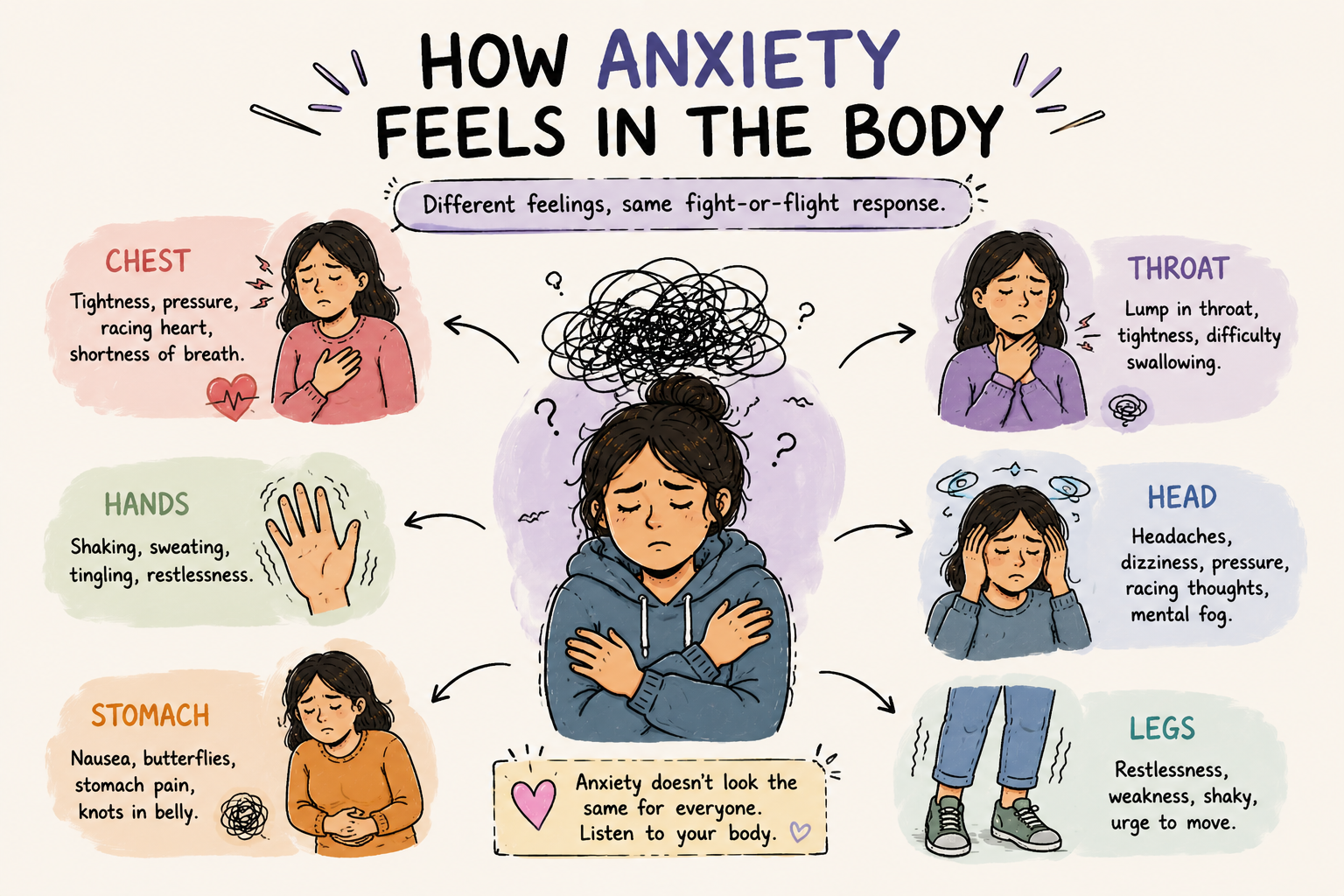
Sometimes it feels like pressure sitting on the chest. Sometimes it’s a tight throat that makes swallowing difficult. For others, it’s shaky hands, weak legs, dizziness, nausea, or a pounding head that refuses to quiet down.
What makes anxiety confusing is that no two people experience it exactly the same way.
The body carries stress differently depending on personality, nervous system sensitivity, past experiences, and even the way someone processes emotions.
That’s why anxiety can feel deeply personal—and sometimes frighteningly physical.
Chest Anxiety: When It Feels Hard to Breathe

For many people, anxiety settles directly in the chest.
It can feel like:
- heaviness
- tightness
- rapid heartbeat
- shortness of breath
- sudden awareness of your heartbeat
This happens because anxiety activates the body’s fight-or-flight response. The nervous system prepares the body for danger, increasing heart rate and tightening muscles.
The difficult part is that chest anxiety can feel extremely convincing. People often mistake it for a serious physical issue because the sensations are so intense.
And once fear enters the picture, the symptoms can become even stronger.
The body reacts to the fear of the sensation itself.
Throat Anxiety: The Lump You Cannot Explain

Some people experience anxiety in the throat.
It may feel like:
- a lump in the throat
- difficulty swallowing
- tightness around the neck
- feeling choked emotionally
This sensation is surprisingly common during stress and emotional overwhelm.
The throat is closely connected to emotional expression. Anxiety often creates muscle tension in that area, especially when feelings are being suppressed or held in internally.
Many people notice throat anxiety during emotionally intense conversations, public speaking, conflict, or periods of overthinking.
It is the body’s way of carrying unspoken tension.
Hand and Leg Anxiety: Shaking, Weakness, and Restlessness

Anxiety can also move through the limbs.
Some people experience:
- trembling hands
- restless legs
- tingling sensations
- numbness
- sudden weakness

This happens because adrenaline changes blood flow and muscle activation throughout the body.
The body prepares for movement even when there is nowhere to run.
That physical energy has to go somewhere.
This is why anxiety can create an urge to pace, fidget, tap fingers, or constantly move.
For some people, stillness almost becomes uncomfortable.
Head Anxiety: Pressure, Dizziness, and Mental Fog

Not all anxiety feels emotional. Sometimes it feels neurological.
People often describe:
- tension headaches
- dizziness
- brain fog
- pressure around the forehead
- feeling detached or mentally exhausted
When the brain stays in a prolonged state of alertness, it becomes overstimulated.
Constant overthinking drains mental energy.
Sleep disruption, shallow breathing, and muscle tension can all intensify head-related symptoms.
This is why anxiety often leaves people feeling physically tired even when they have done very little.
The mind has been working nonstop.
Stomach Anxiety: The Gut Holds Stress Too


The stomach is one of the body’s biggest emotional receivers.
Anxiety in the gut can feel like:
- nausea
- butterflies
- stomach pain
- loss of appetite
- digestive discomfort
This happens because the gut and brain are deeply connected through the nervous system.
Stress changes digestion, muscle contractions, and even appetite signals.
That is why emotional distress often becomes physical discomfort.
Many people notice stomach anxiety before interviews, difficult conversations, travel, or emotionally uncertain situations.
The body reacts before the mind fully processes what it feels.
Why Anxiety Shows Up Differently for Everyone

No two nervous systems are identical.
Some people internalize anxiety mentally. Others feel it almost entirely in the body.
Past experiences, chronic stress, personality traits, sleep, environment, and emotional suppression all influence where anxiety settles physically.
The body often stores what the mind struggles to process.

That is why learning about your personal anxiety pattern matters.
Once you understand how your body responds, the symptoms become less mysterious—and often less frightening.
The Bottom Line
Anxiety is not “just in your head.”
It moves through the chest, throat, stomach, muscles, breath, and nervous system. It can feel loud, physical, and deeply real.
And while those sensations can be overwhelming, they are often signals of a body trying to protect itself—not proof that something is permanently wrong.
Understanding how anxiety shows up in your body creates awareness.
Awareness creates less fear.
And sometimes, reducing fear is the first step toward finally feeling safe again.